Press Release
Port of Toronto posts steady 2025 cargo growth, strong cruise season
The Toronto Port Authority reports a strong 2025 season at the Port of Toronto, underscoring its continued role in supporting regional trade, industry and tourism.
The Toronto Port Authority is proud to announce initial annual results related to the 2025 season at the Port of Toronto, one of Canada’s oldest inland marine ports.
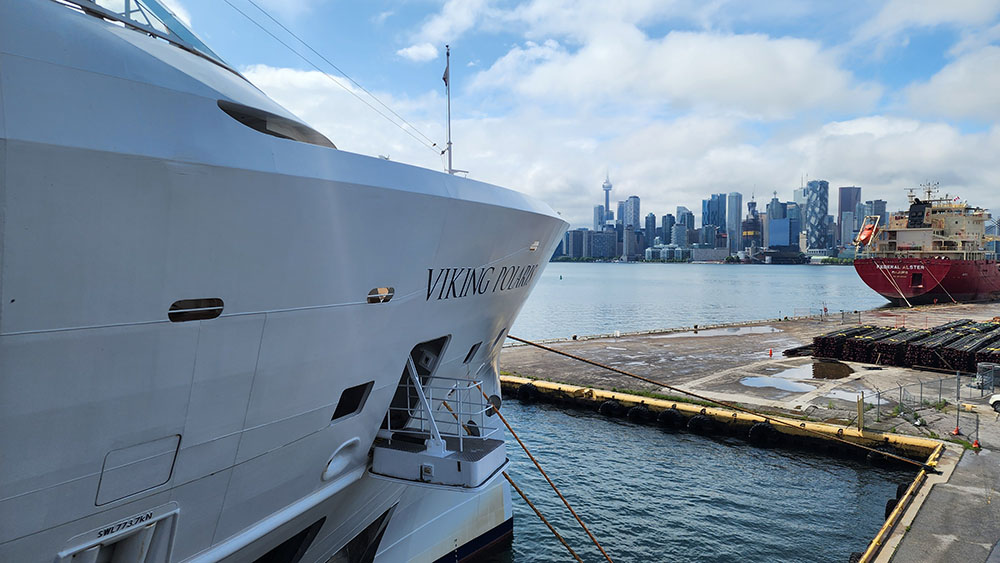
March 27 (TORONTO) – The Toronto Port Authority is proud to announce initial annual results related to the 2025 season at the Port of Toronto, one of Canada’s oldest inland marine ports. In 2025, the Port of Toronto handled more than 2.16 million metric tonnes of cargo, delivered by 167 vessels, marking a 4.5% increase in imports compared with 2024. Bulk commodities included 751,353 tonnes of road salt, 575,898 tonnes of sugar, 714,843 tonnes of cement, 57,667 tonnes of aggregate, and 79,079 tonnes of steel products supporting construction and manufacturing across the Greater Toronto Area.
Salt imports rose 50% from 2024, largely due to demand driven by an icy winter; steel imports rose 24% from 2024; sugar was stable year over year; and cement was down 15% from 2024. This is the first decrease in cement imports since 2022, indicating softening demand from the construction industry.
The Port of Toronto is also home to a burgeoning Great Lakes cruise ship business, with Toronto serving as an essential turnaround point. The cruise ship business at the Port of Toronto posted solid results, with 42 cruise ship calls bringing 18,461 passengers to the city via the Cruise Ship Terminal. Cruise lines included Victory, Pearl Seas, Viking, Ponant, and Hapag-Lloyd.
“The Port of Toronto reported excellent results in 2025, reinforcing the critical role it plays in the movement of people and goods,” said RJ Steenstra, President and CEO of the Toronto Port Authority. “While the year was marked by uncertainty around tariffs and shifting trade dynamics, our operations remained strong, delivering essential goods to the heart of Canada’s most populous region. We look forward to continuing to assess opportunities for modernizing our operations and strengthening Canada’s position as it seeks to diversify trade.”
As these latest results confirm, the Port continues to serve as a vital logistics hub for the Greater Toronto Area, ensuring the efficient movement of essential bulk commodities that support construction, manufacturing, and food and beverage production. Its role in shifting freight from road to marine transport also helps reduce highway congestion and emissions, while strengthening supply chain resilience. At the same time, its cruise operations contribute directly to Toronto’s tourism economy by connecting thousands of visitors to the city’s downtown core each season.
Looking ahead, 2026 is forecast to bring 45 cruise ship calls and nearly 19,000 passengers to the Port of Toronto. This is consistent with projections from Cruise the Great Lakes, which reports that economic impact of Great Lakes cruises will exceed USD $300 million in 2026, an increase of 25% from 2025.
As the seaway opens for 2026, the Port of Toronto remains committed to maintaining stable, consistent imports that support key sectors across the Greater Toronto Area and making upgrades that will ensure we continue to lead in environmentally sustainable marine transport while contributing to the region’s economic growth through activity in trade, tourism and supporting cultural industry.
About the Port of Toronto
Since 1793, the Port of Toronto has served as a vital gateway connecting the city to the St. Lawrence Seaway and international marine ports around the world. A long-standing presence in the city, the Port continues to evolve as a dynamic, multi-use economic hub, owned and operated by the Toronto Port Authority.
Strategically located just minutes from downtown Toronto, the Port primarily handles bulk cargo imports, facilitating the efficient movement of goods from global markets including Europe, Asia, Australia and the Americas. The Port is also home to a Cruise Ship Terminal supporting the city’s growing cruise ship industry. By welcoming international cruise passengers directly into the heart of the city, the Port plays an important role in boosting local tourism, increasing visitor spending and enhancing Toronto’s profile as a destination along the Great Lakes cruise network.
Marine shipping remains one of the safest and most efficient modes of transportation, offering significant advantages over road-based freight on a per-ton basis. As part of an environmentally sustainable marine transportation corridor, the Port of Toronto supports the efficient movement of goods and passengers through one of North America’s busiest economic regions, while also reducing truck traffic by an estimated 54,000 shipments.
This activity generates over 670 directly related jobs and $79.1 million in taxes annually, with an overall economic impact estimated at $460 million each year.
-30-